How to trademark a beauty or cosmetics brand
Beauty is one of the easiest categories to launch into: a contract manufacturer, a white-label formula, a label design and a Shopify store. That ease is exactly why the register is full. A beauty founder's trademark work is mostly about choosing a name that can stand out in class 3 and avoiding words the USPTO treats as a description of the product.
Written by Trademarky. Published November 21, 2026. Last checked November 21, 2026. 5 min read.
The short answer
Cosmetics, skincare, hair care and fragrance are filed in class 3, one of the most crowded classes on the register, so a beauty name built on common words like glow, pure or luxe often meets earlier marks. Ingredient and effect words such as collagen or brightening are usually refused as descriptive. The strongest beauty brands pair an invented or unexpected name with consistent packaging.
- Non-medicated cosmetics, skincare, hair care, nail products and fragrances are registered in class 3.
- Class 3 is crowded, so beauty names built on common words such as glow, pure, bare or luxe often conflict with earlier marks or are weak against copycats.
- An ingredient or effect word, such as collagen, retinol or hydrating, is usually refused as merely descriptive when used for products that contain or do that.
- FDA rules on cosmetic labeling and safety are separate from trademark registration, and a registered name does not satisfy them.
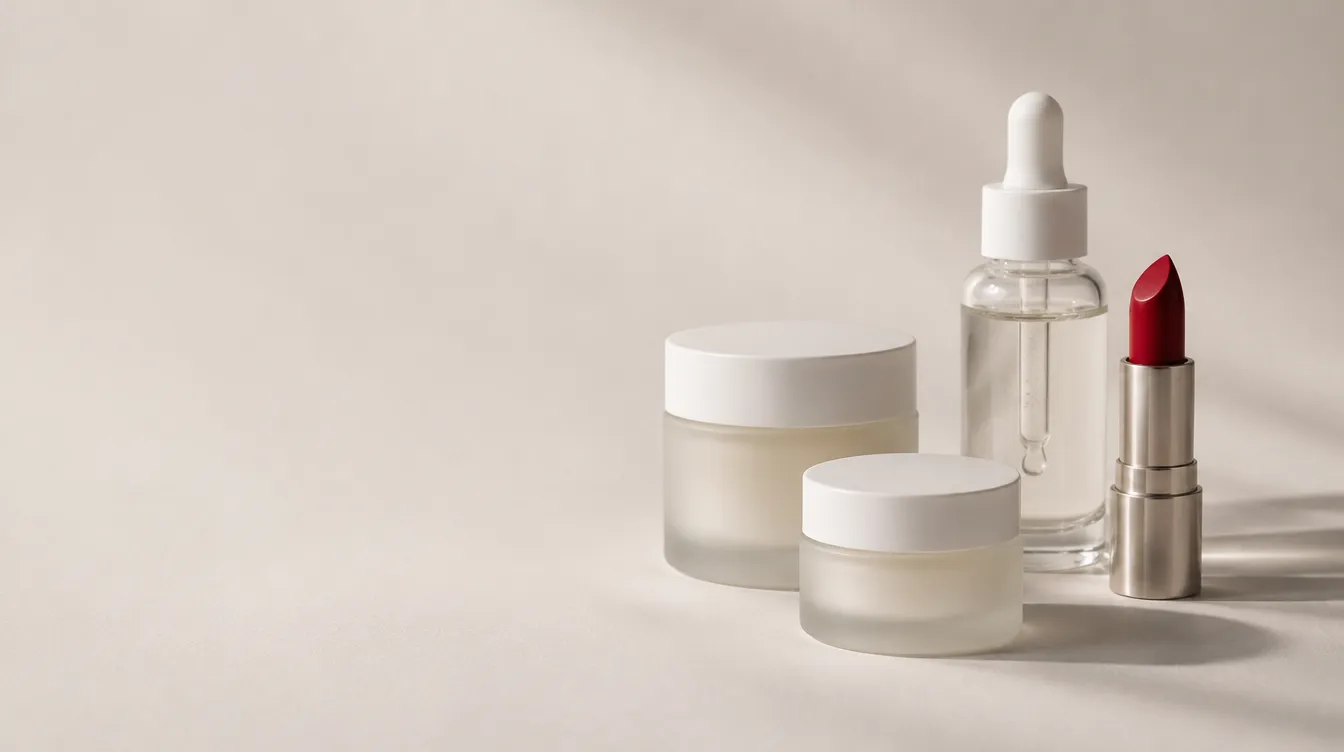
Class 3 and its neighbors
Almost every beauty brand files first in class 3, which covers non-medicated cosmetics, skincare, hair care, nail polish, soaps, essential oils and fragrances. As the line grows, the tools and services around it fall into other classes.
| What you sell | Class |
|---|---|
| Makeup, skincare, hair care, fragrance, non-medicated soaps | 3 |
| Products sold as treating a condition, such as medicated acne creams | 5 |
| Tweezers, nail clippers, eyelash curlers | 8 |
| Makeup brushes, sponges and cosmetic cases | 21 |
| Salon, spa and esthetician services | 44 |
Where a product sits between class 3 and class 5 depends on what it is and how it is described, so describe it accurately rather than choosing the class you prefer. Trademark classes explains how the classes work together.
A crowded field of similar names
Beauty naming leans on the same handful of ideas: light, skin, nature, purity, luxury. The result is a register with many marks sharing words like glow, radiance, bare, pure, luxe and bloom. That cuts two ways.
- A new name that shares its main word with an earlier class 3 mark can be refused for likelihood of confusion, even with a different second word.
- A word used by dozens of brands is weak, so even if you register a name built on it, you may not be able to stop the next brand that uses it too.
- Cosmetics are often found related to fragrance, personal care and salon services, so a search has to look beyond your exact product.
Founders who start from an invented word, an unexpected real word or a coined combination, such as a fictional line called Tessellune Skin, usually find clearance and enforcement much easier. How to name a brand you can trademark walks through the choices.
Ingredient and effect words
A word that immediately describes an ingredient, a feature or a result of the product is refused on the Principal Register as merely descriptive. In beauty that catches names built on collagen, retinol, vitamin C, hyaluronic, shea, bakuchiol, and on effect words like hydrating, brightening, firming or matte.
A name that suggests an ingredient the product does not contain raises a different problem: it can be refused as deceptively misdescriptive or deceptive. A serum named after a botanical it does not contain is the kind of name to rethink.
Packaging, labels and proof of use
For cosmetics, the label on the jar, tube or box is the most natural specimen: the mark printed on the product as sold. An online product page that shows the mark next to the product with a price and a way to buy also works. A mockup from the manufacturer's design proof does not.
Distinctive packaging, such as a bottle shape or a color scheme buyers recognize, can be protected as trade dress when it identifies your brand to buyers, which often takes evidence that buyers have come to recognize it as yours. For a young brand, the name and the logo come first. Trade dress explained covers the rest.
White-label formulas and regulatory rules
Many indie brands buy a stock formula from a manufacturer and sell it under their own name. That is fine for trademark purposes as long as the brand owner, not the manufacturer, owns the name and controls the quality of what is sold under it. Make sure the supply agreement says so.
Separately, the FDA regulates cosmetic labeling, ingredients and safety, and the FTC polices advertising claims. A registered trademark does not satisfy any of those rules, and a name that makes a drug claim, such as promising to cure a skin condition, can cause regulatory trouble whether or not the USPTO registers it.
Run your beauty brand's name through the free check to see the class 3 marks an examiner would compare it with. Check my trademark for free
Questions people ask
What trademark class is skincare?
Non-medicated skincare, makeup, hair care and fragrance are class 3. A product sold as treating a medical condition may belong in class 5 instead, depending on how it is described.
Can I trademark a name that includes an ingredient?
You can register the distinctive part of the name, with the ingredient word disclaimed. A name made only of an ingredient or effect word for products containing it is usually refused as merely descriptive.
Can I trademark a private label skincare line?
Yes. The brand owner can register the name even when a contract manufacturer makes the product, as long as the brand owner controls the quality of the goods. Put ownership of the name in the supply agreement.
Does a trademark registration mean my cosmetics are compliant?
No. Trademark registration only concerns the brand name. Cosmetic labeling, ingredients and safety are governed by FDA rules, and advertising claims by FTC rules, which apply whether or not the name is registered.
Can I use words like clean, natural or organic in my beauty brand name?
You can use them, but you will rarely own them. These words describe a quality of the product, so the USPTO usually asks for a disclaimer or refuses a name made only of them, and a word like organic can also be read as a claim the product must live up to. Build the brand on a distinctive word and let the descriptive one sit beside it.
Sources and further reading
- USPTO: Strong trademarks
- USPTO: Likelihood of confusion
- Merely descriptive: the refusal that catches good names: What a Section 2(e)(1) merely descriptive refusal means, where suggestive ends, acquired distinctiveness in outline, and how the attorney answers it.
- How to name a brand you can trademark: The distinctiveness spectrum in plain English, a naming checklist, how to screen a shortlist, the traps that get names refused, and domain checks.
- Trademark classes explained: The 45 Nice classes the USPTO uses, what each covers, how to pick yours, what extra classes cost, and the pairs small businesses file most.
Keep reading
- How do you trademark a private-label product?: Private-label sellers own a brand, not a product. How to pick a name that can register, choose classes, show use and keep the brand from your supplier.
- What is trade dress, and can you protect your packaging?: Packaging, product shapes and store looks can be protected as trade dress. When they qualify, why function rules some out, and what product design needs.
- What makes a trademark strong? The spectrum of distinctiveness: Generic, descriptive, suggestive, arbitrary and fanciful: the five kinds of trademark, with examples, and why the kind decides whether a name registers.
This guide is general information to help you understand the process. It is not legal advice and does not create an attorney-client relationship. For advice on your own mark, talk to an attorney on a free call.
Contact
Trademarky, LLC, 78 SW 7th St, 5th FL, Miami, FL 33130. (305) 704-7864, hello@trademarky.io. Monday to Friday, 9am to 5pm ET. Available by appointment.
This free check is an AI-assisted preliminary screening against known U.S. trademark records. It is not a comprehensive clearance search and not legal advice. Only a licensed attorney can advise you on whether to file.