How do you trademark a private-label product?
A private-label seller buys a product from a manufacturer, puts its own brand on it and sells it, often on Amazon. The model is quick to start, and that is its weakness: a competitor can source the same item from the same factory next week. What they cannot lawfully copy is your trademark, provided you chose and protected it well.
Written by Trademarky. Published November 21, 2026. Last checked November 21, 2026. 5 min read.
The short answer
In the private-label model, the product often comes from a factory that makes the same item for others, so your brand is the only thing that is truly yours. Protect it by choosing a distinctive name that is not crowded in your category, filing in the class that covers the product, showing the brand on the packaging itself and making sure your supplier has no claim to it.
- For a private-label seller, the trademark is often the only asset a competitor cannot source from the same factory.
- Names that describe the product or echo common category words are hard to register and hard to enforce in crowded categories.
- A trademark for physical goods is filed in the class that covers the product, not in the class for retail or online store services.
- Packaging, labels and tags showing the brand are the usual specimens of use for goods; a mockup does not count.
- A written agreement should say that your company owns the brand, and the supplier may not use or register it.
Why the name is the asset
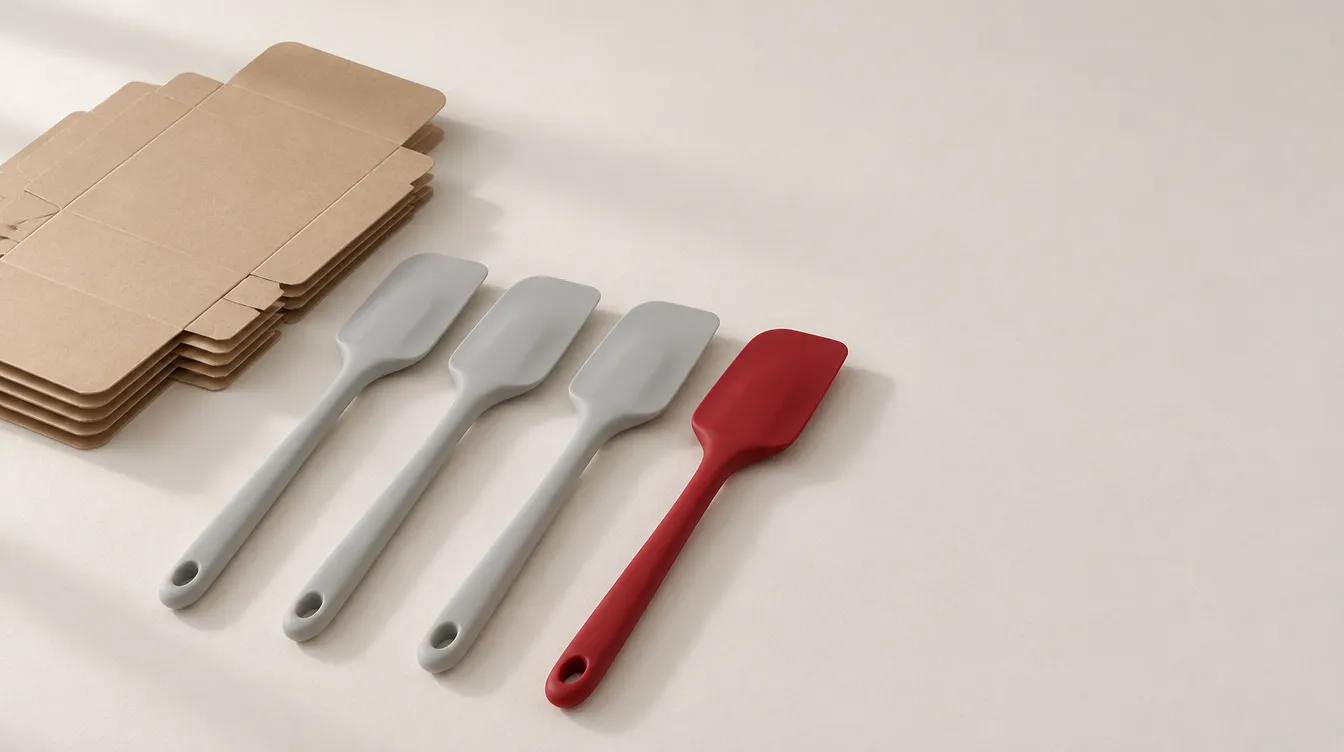
Take Fernhollow Kitchen, an invented brand of silicone kitchen utensils. Its spatulas come from a factory that also supplies a dozen other sellers. The product's shape, material and price can all be matched. The reviews, the repeat buyers and the listing's history attach to the name, and the name is the part the law protects.
That is why private-label sellers who treat the brand as an afterthought often end up rebranding after a refusal, a complaint from an earlier owner or a copycat they cannot stop. Choosing and filing the name early costs far less than rebuilding a listing later.
Naming risks in crowded categories
Popular Amazon categories are full of names built from the same handful of words: pure, premium, eco, pro, home, life, plus the product itself. Those names run into two problems at the USPTO.
- Descriptiveness: a name that tells buyers what the product is or does, such as a word for its material or purpose, is refused as merely descriptive.
- Likelihood of confusion: a name close to an earlier registration for related goods is refused, and in a crowded category there is almost always an earlier registration nearby.
- Weak protection: even a name that registers is hard to enforce when it shares its main word with many others.
Invented or arbitrary names avoid all three. A name with no meaning for the product, like Fernhollow for utensils, is easy to search, likely to register and simple to enforce. How to name a brand you can trademark explains the spectrum from generic to invented.
Choosing the right class
The USPTO sorts goods and services into 45 classes, and the application fee is charged for each one. A private-label seller files for the product itself. Utensils go in one class, clothing in another, supplements in another, and so on.
If the line will grow into related products in another class within a few years, an intent-to-use application can cover it now. One class or several walks through that decision, and trademark classes lists how the classes work.
Packaging as proof of use
An application based on use, or a Statement of Use after an intent-to-use filing, needs a specimen: a real example of the mark on the goods as buyers meet them. For private-label products the strongest specimens are usually the packaging, a sewn-in or printed label, a hang tag or the product itself bearing the mark.
- A photograph of the actual packaging, not a design file or a render.
- A product page that shows the mark near the product with a way to buy it, such as the price and an add to cart button.
- Not a factory sample photo with a mark digitally added, which the USPTO refuses and can sanction.
Brand Registry asks for the same thing in its own way: the brand permanently on the product or packaging. Planning the packaging with both in mind saves a round of photographs.
Your supplier and your brand
Manufacturers usually want nothing to do with your brand, but problems do happen: a factory that sells leftover stock under your name, or a supplier, agent or reseller who files your brand in its own country before you do. Many countries register the first person to file, not the first to use.
- Put it in writing: your company owns the brand, the packaging artwork and any molds or designs made for it.
- Forbid the supplier from using, selling under or registering your brand or anything similar, anywhere.
- File in the United States in your company's name before you share final artwork.
- If you manufacture abroad, ask your attorney whether a filing in that country is worth it for your volume.
Before you approve packaging, the free check runs your brand name against the USPTO register and shows how crowded your category is. Check my trademark for free
Questions people ask
Can I stop another seller from selling the same product from my supplier?
Not with a trademark alone, if they sell it under their own brand. A trademark protects the name, not the product. You can stop them from using your brand or a confusingly similar one, and a design patent or an exclusivity agreement may help with the product itself.
Is white label the same as private label for trademarks?
For trademark purposes they work the same way. In both, the product comes from a manufacturer and you sell it under your brand. What you can protect is the brand, so the advice on naming, classes and packaging applies to both.
Can I file before my first shipment arrives?
Yes. An intent-to-use application reserves your priority from the filing date while the product is being made. Before it registers, you file a Statement of Use with a real specimen, such as a photograph of the finished packaging.
Should the manufacturer be listed as the trademark owner?
No. The owner should be the business that controls the brand and the quality of the goods sold under it, which is your company. Naming the wrong owner can make the application void.
Sources and further reading
- USPTO: Goods and services
- USPTO: Likelihood of confusion
- How to name a brand you can trademark: The distinctiveness spectrum in plain English, a naming checklist, how to screen a shortlist, the traps that get names refused, and domain checks.
- Trademark classes explained: The 45 Nice classes the USPTO uses, what each covers, how to pick yours, what extra classes cost, and the pairs small businesses file most.
- Trademark specimens: what the USPTO accepts and what it refuses: What a trademark specimen is, the difference between specimens for goods and services, examples the USPTO accepts and refuses, and how to prepare one.
Keep reading
- Do you need a trademark to sell on Amazon?: Selling on Amazon needs no trademark, but Brand Registry does. What Amazon asks for, what a pending US application counts for and what enrollment gives.
- Should you file your trademark in one class or several?: How to decide how many classes to file your trademark in: what each class costs, what one class already protects, and how to plan for new products.
- What should you search before launching a brand?: What to search before you launch a brand name: the USPTO register, unregistered use, domains and marketplaces, and what a real conflict looks like.
This guide is general information to help you understand the process. It is not legal advice and does not create an attorney-client relationship. For advice on your own mark, talk to an attorney on a free call.
Contact
Trademarky, LLC, 78 SW 7th St, 5th FL, Miami, FL 33130. (305) 704-7864, hello@trademarky.io. Monday to Friday, 9am to 5pm ET. Available by appointment.
This free check is an AI-assisted preliminary screening against known U.S. trademark records. It is not a comprehensive clearance search and not legal advice. Only a licensed attorney can advise you on whether to file.